
BIOGRAPHY
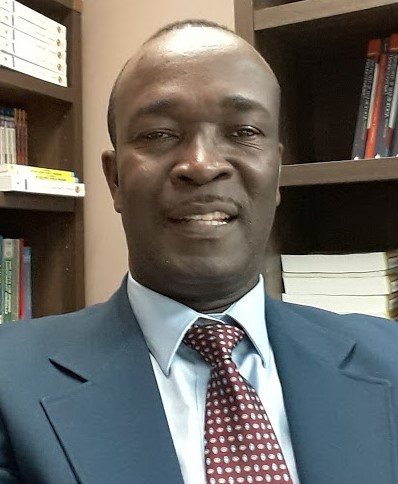
Physician. Public Servant. Humanitarian. Advocate for Haiti’s Renewal.
Dr. Raymond Pierre is a Haitian physician, public-sector executive, humanitarian, and institutional governance leader whose career has been dedicated to public service, healthcare, community development, and strengthening Haiti’s institutions.
Born in Verrettes, Haiti, Dr. Pierre earned his Doctor of Medicine from the State University of Haiti and later an MBA from the Florida Institute of Technology. Over more than two decades of professional and public service, he has held leadership responsibilities spanning public health, government administration, humanitarian development, institutional governance, and engagement with Haiti’s diaspora and international partners.
His experience includes service as Chairman of the Administrative Council of the State University Hospital of Haiti (HUEH), government-level responsibilities in Haiti’s public sector, technical advisory work involving international development institutions, and leadership of humanitarian and diaspora organizations.
In February 2026, Dr. Pierre was officially named among the three nominees for Head of Government of Haiti’s Transition emerging from the Assises du Dialogue National Inter-Haïtien. His participation in this process reflects a broader commitment to political neutrality, institutional stability, credible elections, and a peaceful return to constitutional government.
At the center of Dr. Pierre’s vision is a simple conviction: Haiti’s greatest resource is its people. He advocates a new standard of public leadership based on competence, integrity, service, national unity, accountability, and measurable results - mobilizing the talent of Haitians at home and throughout the diaspora to rebuild functioning institutions and create opportunity for the next generation.
Fluent in Haitian Creole, French, English, and Spanish, Dr. Pierre brings together Haitian experience and international perspective with a commitment to building a safer, stronger, more prosperous, and democratically governed Haiti.
His approach to leadership is rooted not in the pursuit of power, but in the responsibility to serve, and in the belief that Haiti can once again become a nation in which its people can confidently build their future.
From Verrettes to a Life of Service
Rooted in Haiti
Dr. Raymond Pierre was born on November 10, 1971, in Verrettes, in Haiti’s Artibonite Valley, into a hardworking family whose story reflected both the challenges and aspirations of provincial Haiti. His parents are farmers and entrepreneurs. Their roots were in the community of Guillaume Mogé in Verrettes.
He grew up as the third of seven children and shared his childhood with a twin brother. In a family where higher education had not traditionally been within easy reach, education became a pathway toward something larger, not simply personal advancement, but the possibility of serving others and changing what was considered possible for the next generation.
That aspiration ultimately extended throughout the family. The children pursued higher education and professional careers in fields including agriculture, dentistry, engineering, medicine, and business. For Raymond Pierre, those beginnings helped establish a conviction that would remain central to his life: where a person begins should never determine how far education, discipline, and service can take them.
Education as a Door to Opportunity
His education began at the Frères de l’Instruction Chrétienne in Verrettes, where he studied from 1977 to 1984. He later attended Collège Dumarsais Estimé and Collège Jean Price Mars, completing his secondary education with honors in 1991.
Growing up in Verrettes also placed him within the historical memory of a community associated with President Dumarsais Estimé, one of Haiti’s twentieth-century heads of state. His education and surroundings exposed him early to the idea that professional achievement and public responsibility need not be separate paths.
In 1992, Pierre earned admission to the State University of Haiti, with the opportunity to pursue either agronomy or medicine.
The choice was significant. Both disciplines spoke directly to Haiti’s needs, but he chose medicine, influenced by the country's shortage of healthcare professionals and by a desire to demonstrate to young people from communities like his own that advancement could be achieved through education, competence, discipline, and service rather than privilege or family connections.
That decision would define the first chapter of his professional life.
Medicine Became a Path to Public Service
Dr. Pierre's medical education exposed him not only to illness, but to the broader conditions that determine whether communities prosper: poverty, weak institutions, limited access to healthcare, inadequate infrastructure, and the profound inequality between those who can obtain essential services and those who cannot.
Medicine therefore became more than a profession. It became an entry point into public health, humanitarian service, institutional leadership, and eventually public administration.
That progression can be seen in his subsequent career, from community health and HIV/AIDS programs to national public institutions and hospital governance. His later appointment as president of the administrative council of Haiti's principal public teaching hospital, HUEH, placed him at the center of efforts to improve the management of an institution facing a major operational crisis. Contemporary Haitian reporting documents his installation in that role in September 2016.
Yet his connection to his hometown remained tangible. Years later, humanitarian work associated with Community Mission for Hope supported education and health initiatives in Verrettes, including development of the Good Samaritan school serving local children.
The Beginning of a Larger Journey
The journey from a farming and merchant family in Verrettes to medicine, humanitarian service, institutional leadership, and national public service is central to understanding Dr. Pierre's approach to leadership.
It produced a philosophy grounded in a straightforward belief:
Talent exists everywhere in Haiti. Opportunity does not. The responsibility of leadership is to help close that distance.
For Dr. Pierre, Haiti's renewal therefore begins not with personalities or political privilege, but with people. - giving a child access to education, a young professional an opportunity to serve, a family a functioning healthcare system, and citizens institutions worthy of their confidence.
The same idea that carried a young student from Verrettes into medicine continues to shape his vision for Haiti today: build opportunity, develop people, strengthen institutions, and place service above privilege.
From Verrettes to Medicine, Management & Public Leadership
Dr. Raymond Pierre’s educational journey began in Verrettes, Artibonite, where he developed the academic foundation that would eventually lead him from provincial Haiti to medical training, public service, and graduate studies in the United States.
He began his primary education at the Frères de l’Instruction Chrétienne in Verrettes, attending from 1977 to 1984. He subsequently pursued his secondary studies at Collège Dumarsais Estimé and Collège Jean Price Mars, completing his secondary education with honors in 1991.
In 1992, he entered the State University of Haiti (Université d’État d’Haïti). Presented with the opportunity to pursue either agronomy or medicine, he chose medicine—a decision shaped by his interest in service and Haiti’s pressing need for trained healthcare professionals.
He completed his medical education at the Faculty of Medicine and Pharmacy of the State University of Haiti, earning his Doctor of Medicine (M.D.) in 1998.
His education did not end with medicine. As his professional responsibilities expanded from clinical and public-health work into administration, institutional governance, and organizational leadership, Dr. Pierre pursued graduate education in management in the United States, earning a Master of Business Administration (MBA) from the Florida Institute of Technology.
He also pursued studies at Miami Dade College, further extending an educational path spanning Haiti and the United States.
Academic Background
Doctor of Medicine (M.D.)
Université d’État d’Haïti — Faculty of Medicine and Pharmacy
Port-au-Prince, Haiti
Master of Business Administration (MBA)
Florida Institute of Technology
Melbourne, Florida, USA
Additional Studies
Miami Dade College
Miami, Florida, USA
Primary & Secondary Education
Frères de l’Instruction Chrétienne — Verrettes, Haiti
Collège Dumarsais Estimé — Haiti
Collège Jean Price Mars — Haiti
Education as a Foundation for Service
Dr. Pierre’s education reflects the combination that has characterized his professional life: medicine and management, Haiti and the international community, technical expertise and public service.
That multidisciplinary foundation later informed his work in public health, government administration, humanitarian development, and institutional governance, including his leadership at Haiti’s principal public teaching hospital, where his role as president of the Administrative Council was publicly documented.
A Career of Medicine, Public Service & Institutional Leadership
Dr. Raymond Pierre's professional journey has crossed medicine, public health, humanitarian service, government administration, institutional governance, and diaspora leadership. Throughout that career, a consistent theme has been the application of professional expertise to institutions and communities facing difficult conditions.
Public Health & International Development
After completing his medical education, Dr. Pierre moved into public health at a time when Haiti faced major challenges in expanding its response to HIV/AIDS and strengthening community-based healthcare.
From 1999 to 2002, he served as HIV Program Manager with CARE Haiti, working at the intersection of medicine, public health programming, community engagement, and international development.
This period helped broaden his perspective beyond individual patient care toward the larger systems that determine health outcomes, public institutions, financing, education, prevention, and community capacity.
Humanitarian & Community Leadership
Dr. Pierre later expanded his work into humanitarian and community development, including the establishment and leadership of Community Mission for Hope, Inc.
The organization mobilized professionals and volunteers to support underserved Haitian communities through health and education initiatives. Independent public records identify Dr. Pierre as the organization's director, while contemporary reporting identifies him as its founder and president and documents its work supporting the Good Samaritan school in Verrettes.
For Dr. Pierre, humanitarian service became another expression of the same principle that initially drew him toward medicine: professional success carries a responsibility to create opportunity for others.
Government & Public Administration
His career subsequently expanded into Haitian government and institutional administration.
Dr. Pierre served as a Technical Adviser within Haiti's Office of Disability, where his responsibilities included institutional coordination and work involving international development partners, including engagement associated with World Bank-supported initiatives.
He also served at the cabinet level within Haiti's public sector, contributing experience in health policy, administration, and coordination across government institutions.
These responsibilities moved his work increasingly from program implementation toward the broader challenges of governance, institutional capacity, public accountability, and management of limited national resources.
Leadership at Haiti's State University Hospital
A major chapter of his public career came with his appointment as President of the Administrative Council of the Hôpital de l'Université d'État d'Haïti (HUEH), Haiti's main public teaching hospital.
The appointment came during a serious institutional crisis. On September 15, 2016, Haiti's Ministry of Public Health installed the three-member Administrative Council headed by Dr. Pierre following a prolonged strike and significant disruption at HUEH. Contemporary reporting described the Council's mandate as supporting improved management of the country's largest public hospital.
At his installation, Dr. Pierre emphasized collaboration with hospital management, continuity of healthcare services, stronger administration, and improvements in university medical education so Haitian students could compete at an international level.
The assignment brought together the principal dimensions of his professional background: medicine, management, education, institutional reform, and public service.
Diaspora & Civic Leadership
Dr. Pierre's work has also extended to Haiti's diaspora, where he has participated in organizations seeking to strengthen the relationship between Haitian professionals abroad and the country's development.
His civic engagement has included leadership of Citizen Action for the Development of Haiti (CADH) and service as a former chair of CMH, Incorporated, reflecting a broader conviction that Haiti's diaspora should be more than a source of remittances, it should be an organized source of knowledge, investment, professional expertise, international relationships, and national service.
From Professional Service to National Leadership
Across these different roles, Dr. Pierre's career has evolved from treating individual patients to confronting a larger question: How can Haiti build institutions capable of serving millions of citizens effectively?
That progression, from physician to public-health executive, humanitarian leader, government adviser, hospital administrator, and civic leader, has shaped his approach to public leadership around several recurring principles:
competence, institutional discipline, accountability, service, and the development of Haiti's human capital.
His career reflects a belief that rebuilding Haiti cannot depend on one sector alone. Public institutions, private enterprise, civil society, the diaspora, universities, communities, and international partners must each contribute their respective strengths to a common national purpose.
One Career. A Consistent Purpose.
Medicine → Public Health → Humanitarian Service → Government → Institutional Leadership → Diaspora Engagement → National Service
Across these chapters, the central purpose has remained consistent: to strengthen institutions, expand opportunity, mobilize Haitian talent, and place professional competence at the service of the country.
Public Service Record
Service to People. Service to Institutions. Service to Haiti.
Dr. Raymond Pierre's public service spans public health, humanitarian action, government advisory responsibilities, hospital governance, medical education, diaspora engagement, and national civic dialogue. His record reflects a career that has moved between community-level service and responsibility within major Haitian public institutions.
Public Health & Community Service
As a physician and public-health professional, Dr. Pierre began his career working on some of Haiti's pressing health challenges, including HIV/AIDS prevention and community-based health programming.
His early work with CARE Haiti, followed by humanitarian and community-development initiatives, helped establish a service philosophy centered on bringing professional expertise closer to populations with limited access to healthcare, education, and economic opportunity.
Through Community Mission for Hope, he subsequently participated in initiatives connecting healthcare, education, humanitarian assistance, and community development, including work benefiting communities in Haiti's Artibonite region.
Government & Institutional Service
Dr. Pierre later served as a Technical Adviser within Haiti's Office of Disability, contributing to institutional development and coordination involving national authorities and international development partners.
His public-sector experience also included responsibilities within Haiti's government administration, broadening his work from individual programs toward questions of public policy, institutional management, accountability, and delivery of government services.
Leadership of Haiti's Principal Public Teaching Hospital
One of the clearest publicly documented chapters of Dr. Pierre's government service came in September 2016, when Haiti's Ministry of Public Health and Population installed him as President of the Administrative Council of the Hôpital de l'Université d'État d'Haïti (HUEH), the country's principal public teaching hospital.
The assignment came after months of paralysis at the hospital. The Ministry charged the new Administrative Council with promoting rigorous management of the hospital's human, material, and financial resources, improving coordination between HUEH and the Ministry, and helping restore an institution essential both to specialized care and the training of Haiti's medical professionals.
Dr. Pierre had also participated in the discussions surrounding the resolution of the hospital crisis and the resumption of medical residency, internship, and social-service training. Ministry records identify him among the participants in the September 2016 hospital-university discussions following approximately five months of disruption.
At his installation, he publicly emphasized restoring order and services, strengthening management, developing adequate emergency ambulance capacity, and improving university medical education. Contemporary reporting also records his call for stronger academic standards so Haitian medical students could compete internationally.
Diaspora & Civic Engagement
Dr. Pierre's public service has extended beyond formal government institutions into Haiti's diaspora and civil society.
Through organizations including Citizen Action for the Development of Haiti, his work has focused on mobilizing Haitian professionals, community leaders, entrepreneurs, and diaspora expertise around national development and stronger institutions.
This dimension of his service reflects a broader principle: Haiti's diaspora should not be viewed solely as a source of remittances, but as an extension of the country's intellectual, professional, entrepreneurial, and institutional capacity.
A Record Built Around Service
Across these responsibilities, Dr. Pierre's public-service record connects several areas often treated separately: healthcare, education, institutional governance, humanitarian action, government administration, and diaspora engagement.
His guiding principle is straightforward:
Public office is not a privilege to be possessed; it is a responsibility entrusted for a defined purpose and a defined period of time.
From community health initiatives to the governance of Haiti's largest public teaching hospital, his public service has been shaped by the belief that stronger institutions, competent administration, accountability, and investment in people are essential to rebuilding public confidence in the Haitian state.
A Vision in Three Pillars
Our vision for Haiti is built around three interconnected priorities: restoring security and effective government, creating economic opportunity, and investing in Haiti’s people. Together, they provide a practical foundation for moving the country from recurring crisis toward stability, productivity, and democratic renewal.
Pillar I — Security, Sovereignty & Effective Government
Restore the authority of the State and rebuild public confidence.
Haiti cannot prosper without security, functioning institutions, and the rule of law. The first responsibility of government must be to protect its citizens, recover national territory from criminal control, secure strategic infrastructure and borders, and strengthen the professional capacity of the Haitian National Police and Armed Forces.
At the same time, security must be accompanied by competent, transparent, and accountable government, modernizing public administration, combating corruption, strengthening institutions, and ensuring that public resources serve the Haitian people.
The objective: A secure country, a sovereign State, and institutions that work.
Pillar II — Economic Renewal, Jobs & National Productivity
Transform Haiti from an economy of survival into an economy of opportunity.
Haiti’s long-term stability depends on giving its people a genuine economic stake in their country’s future. The priority must be to create the conditions for investment, entrepreneurship, job creation, local production, and access to global markets.
Agriculture, manufacturing, construction, energy, tourism, logistics, technology, digital services, and small businesses can become engines of growth when supported by reliable electricity, modern infrastructure, access to capital, workforce development, and predictable government.
The Haitian diaspora should be fully integrated into this transformation—not simply as a source of remittances, but as a source of investment, expertise, technology, networks, and entrepreneurship.
The objective: A Haitian economy that produces, competes, creates jobs, and allows people to build prosperous lives at home.
Pillar III — People, Opportunity & the Next Generation
Make the Haitian people the center of national development.
Haiti’s greatest resource is neither beneath its soil nor outside its borders. It is its people.
National renewal therefore requires sustained investment in children, education, healthcare, nutrition, local agriculture, universities, vocational training, technology, and the skills required by the economy of the future.
Young Haitians must be prepared not only for the jobs that exist today, but for emerging opportunities in artificial intelligence, digital services, engineering, healthcare, advanced trades, entrepreneurship, and the global knowledge economy.
This pillar also calls for mobilizing Haitians everywhere, at home and throughout the diaspora, to contribute their knowledge, experience, professional networks, and service to rebuilding the country.
The objective: A generation equipped not merely to survive Haiti’s challenges, but to transform the country.
One National Purpose
SECURITY & EFFECTIVE GOVERNMENT
Restore order. Strengthen institutions. Protect sovereignty.
ECONOMIC RENEWAL & JOBS
Produce. Invest. Create opportunity.
PEOPLE & THE NEXT GENERATION
Educate. Empower. Build Haiti’s future.
The three pillars reinforce one another. There can be no lasting economic development without security; no lasting security without opportunity; and no lasting national progress without investing in people.
The goal is not simply to govern Haiti through another period of crisis. It is to build the foundations of a Haitian state that works, an economy that produces, and a society in which the next generation can confidently choose to build its future at home.